
Mobile Design & DEVELOPMENT (Freelance)
The Best Move
Context aware food recommendation app
Tools
Figma · Claude Design· React
Scope of work
Developer · Designer
Platforms
iOS · Android
Duration
6 weeks
Why The Best Move?
People are increasingly turning to AI for personalized health advice, but tools like ChatGPT have no memory. Every time someone wants a useful recommendation, they have to start from zero, re-explaining their workout, their goals, and what's in their kitchen, in a fresh chat, every single day.
I saw an opportunity to fix this gap directly. The goal was simple: build a system that remembers a user's context instead of asking them to repeat it, so a recommendation could actually reflect their real life, not just whatever they happened to type that day.

Designing for memory, not just response
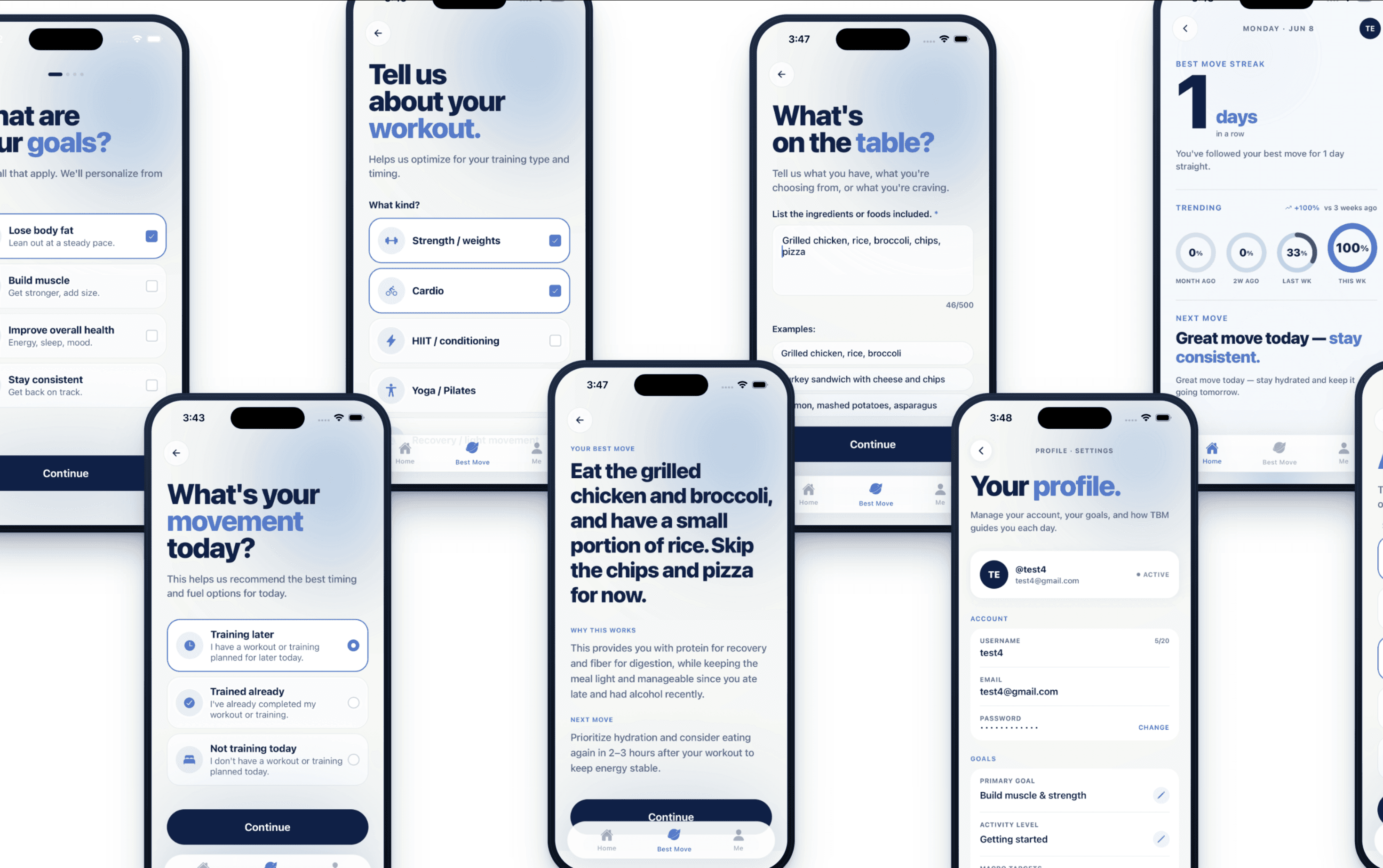
I led the design of a structured, daily check-in that replaces the open-ended chat prompt entirely. Instead of typing paragraphs into a chat box, users answer a few specific questions, fast enough to fit into a real routine, but detailed enough to capture what actually matters.
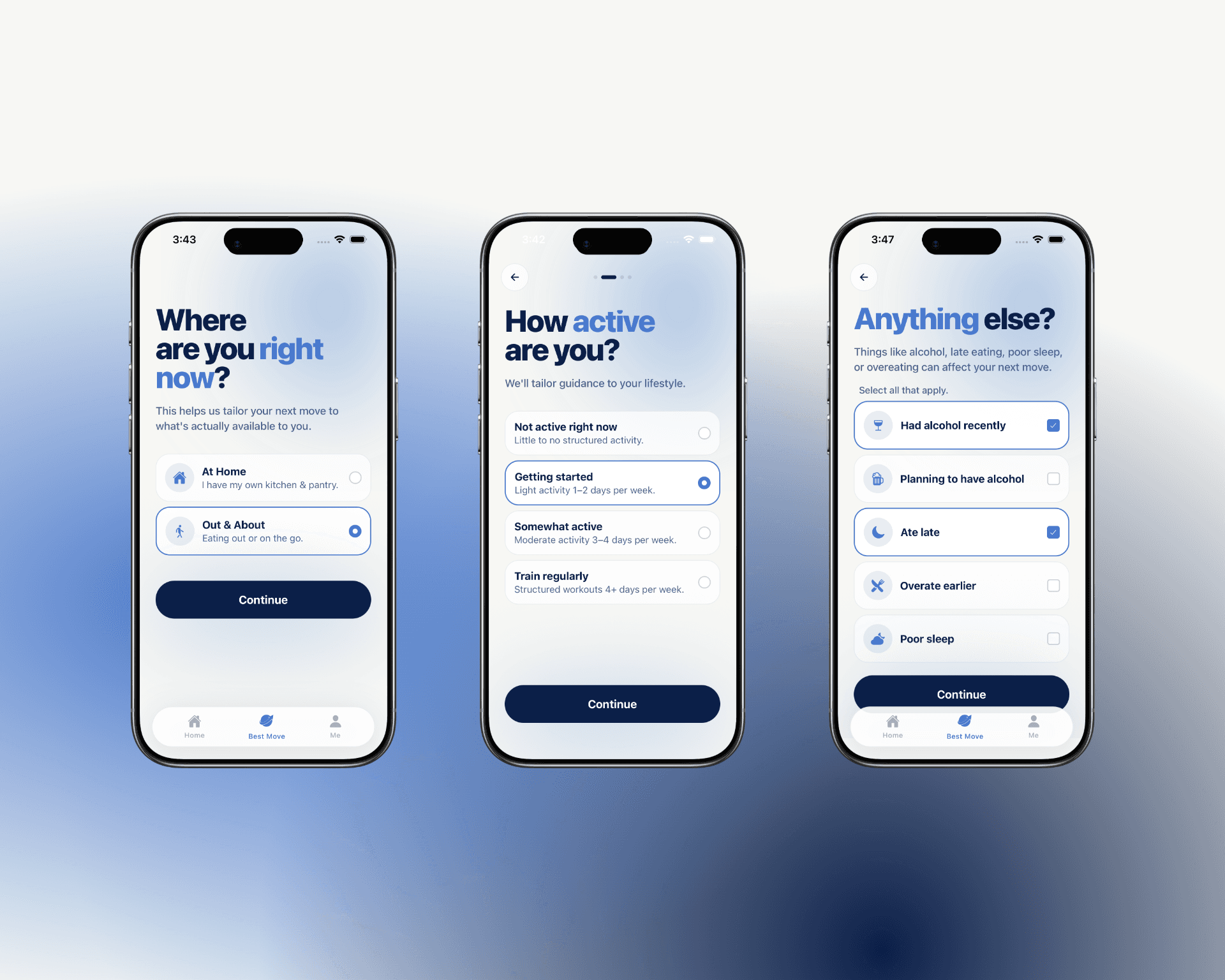
Onboarding establishes the baseline: goals and activity level. From there, two short daily flows take over. One covers the workout, what kind, when, and whether it's already happened. The other covers food and lifestyle, what's available, where the user is, and the details most people never think to mention in a chat: alcohol, late eating, poor sleep, overeating.

From input to a real recommendation
The output reflects everything gathered, not just the workout and the food. When a user logs that they had alcohol recently and ate late, the recommendation adjusts for it directly, something a generic chat prompt only catches if the user remembers to bring it up themselves.


Beyond a single recommendation, the system tracks consistency over time. Streaks, weekly trends, and a clear profile turn a one-off check-in into an ongoing relationship with the user's own data.

Key learnings
Designing for the moment
TBM had to work at the exact second a user is standing in front of food. That constraint shaped every design decision: fewer screens, faster inputs, no required formats. The value had to be immediate or it was nothing
Context is the product
The same Chipotle bowl means something completely different pre-workout versus post-workout. Building the contextual layer with modifiers, was not a feature, it was the core logic that made every recommendation worth it.
Prompt engineering is UX work
The AI output is what the user actually sees and acts on, which means the prompt is as much a design surface as the UI. Small changes to how context was structured and weighted produced dramatically different recommendation.